
Perplexity AI is reshaping how we search for and consume information online. By combining conversational AI with real-time web access, it offers a new paradigm for search engines. This article explores Perplexity’s features, use cases, ethical implications, and its potential to redefine digital information.

Introduction & Context
The internet revolutionized how we access information, but search engines have remained largely unchanged for decades. Enter Perplexity AI, an innovative platform that combines conversational AI with real-time web access. Unlike traditional search engines that return a list of links, Perplexity offers direct, conversational answers backed by sourced references.
Perplexity’s journey began as an answer to the limitations of search engines like Google and Bing. While these platforms excel at indexing the web, they often fall short in delivering nuanced, context-aware responses. By leveraging large language models (LLMs) and real-time data, Perplexity aims to fill this gap. Its launch coincides with a broader trend of integrating AI across industries, from customer service to healthcare.
In 2023, Microsoft’s integration of ChatGPT into Bing marked a pivotal moment for conversational search. However, Perplexity distinguishes itself by focusing on transparency and real-time information retrieval. With the rise of misinformation and the increasing complexity of digital queries, the need for reliable, contextual search tools has never been greater.
Description
Perplexity AI is a conversational search engine powered by advanced language models and real-time web scraping. At its core, it aims to provide users with precise, context-rich answers rather than a list of hyperlinks. Here’s how it works:
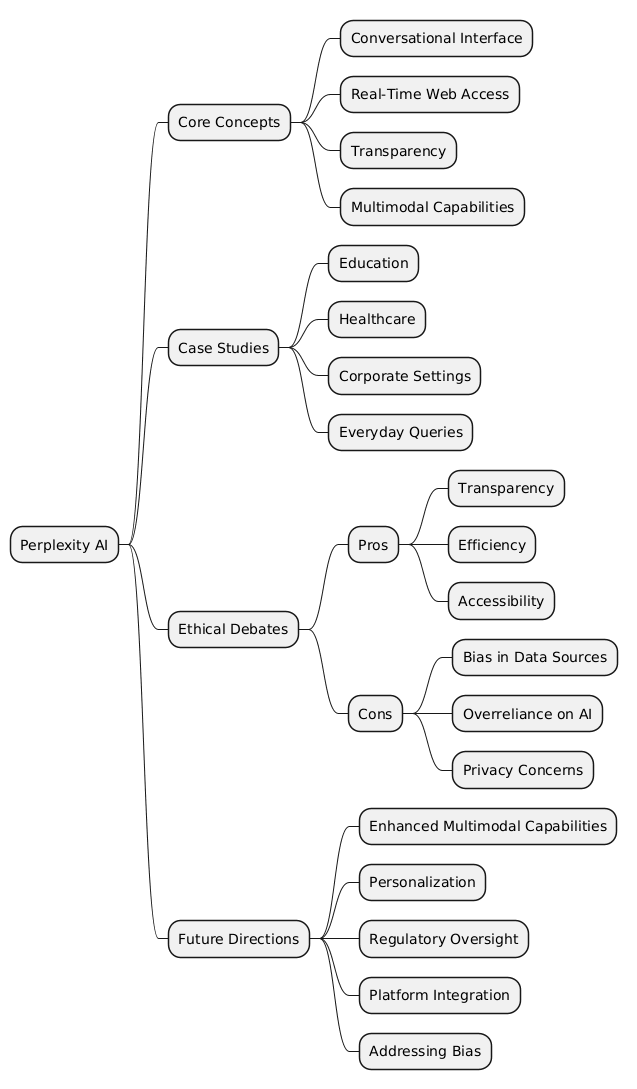
- Conversational Interface: Users interact with Perplexity by typing questions in natural language. The platform responds with detailed, sourced answers.
- Real-Time Web Access: Unlike static language models, Perplexity connects to the internet in real-time, ensuring up-to-date information.
- Transparency: Each response is accompanied by citations, allowing users to verify the sources of information.
- Multimodal Capabilities: Beyond text, Perplexity can integrate images, videos, and other media to enrich its answers.
For example, when asked, “What are the health benefits of meditation?” Perplexity provides a concise summary along with links to peer-reviewed studies and expert blogs. This hybrid approach bridges the gap between traditional search engines and conversational AI.
Use Cases
Perplexity AI’s versatility makes it a valuable tool across various domains. Here are some real-world applications:
1. Education
Students and educators use Perplexity to find accurate, real-time answers for academic research. Unlike Google, which often requires sifting through multiple links, Perplexity provides direct, well-cited answers. For instance, a biology student researching “CRISPR technology” can receive a detailed explanation alongside references to scientific journals.
2. Healthcare
Healthcare professionals leverage Perplexity to access the latest medical guidelines and research. A doctor could query, “What are the recent advancements in Alzheimer’s treatment?” and receive a synthesized response complete with citations from trusted medical publications.
3. Corporate Settings
Businesses use Perplexity for market research and competitor analysis. For example, a marketing team might ask, “What are the latest trends in digital advertising?” and receive actionable insights backed by data.
4. Everyday Queries
From planning vacations to troubleshooting tech issues, Perplexity serves as a personal assistant. A user could ask, “What are the best hiking trails in Colorado?” and receive a curated list with links to travel blogs and local guides.
These use cases highlight Perplexity’s potential to streamline information retrieval across industries.
How to Use Perplexity
Getting started with Perplexity AI is straightforward. Follow these steps:
- Access the Platform: Visit Perplexity’s website.
- Create an Account: While optional, creating an account allows you to save queries and access advanced features.
- Ask a Question: Type your query in natural language. For example, “What are the economic impacts of renewable energy?”
- Review the Response: Perplexity will provide a detailed answer with citations. Hover over the citations to view the original sources.
- Refine Your Query: If needed, ask follow-up questions to narrow down the information.
- Explore Additional Features: Use Perplexity’s multimodal capabilities to include images or videos in your queries.
Perplexity’s intuitive design ensures that even first-time users can navigate the platform with ease.
Ethical Debate
Like any transformative technology, Perplexity AI raises important ethical questions. Here are some key considerations:
Pros
- Transparency: Unlike many AI tools, Perplexity provides citations, allowing users to verify the accuracy of information.
- Efficiency: By delivering direct answers, it saves users time compared to traditional search engines.
- Accessibility: Its conversational interface makes information retrieval more intuitive.
Cons
- Bias in Data Sources: Perplexity’s reliance on web scraping means it could propagate biases present in its sources.
- Overreliance on AI: Users may become overly dependent on Perplexity, potentially reducing critical thinking skills.
- Privacy Concerns: Real-time web access raises questions about data security and user privacy.
Societal Implications
Perplexity has the potential to democratize access to information, but it also risks amplifying misinformation if not carefully monitored. As AI becomes more integrated into daily life, striking a balance between innovation and ethical responsibility will be crucial.
Future Directions
Perplexity AI is just the beginning of a new era in information retrieval. Here’s what the future might hold:
- Enhanced Multimodal Capabilities: Integrating voice and video inputs could make Perplexity even more versatile.
- Personalization: Future iterations may allow users to customize their search experience based on preferences and past queries.
- Regulatory Oversight: As AI tools become more prevalent, governments may introduce regulations to ensure ethical use.
- Integration with Other Platforms: Perplexity could partner with educational, healthcare, and corporate platforms to expand its reach.
- Addressing Bias: Ongoing efforts to diversify data sources could mitigate the risk of biased responses.
By addressing these areas, Perplexity could solidify its role as a cornerstone of the digital age.
Mind Map
Key Takeaways
- 💡 Insightful Idea: Perplexity AI redefines search by combining conversational AI with real-time web access.
- ⚠️ Warning: Overreliance on AI could diminish critical thinking and amplify misinformation.
- 🔍 Key Detail: Transparency through citations is a standout feature of Perplexity.
- 🚀 Future Opportunity: Multimodal and personalized capabilities could revolutionize its usability.
- 🌍 Societal Impact: Perplexity has the potential to democratize access to reliable information globally.
This article offers a comprehensive exploration of Perplexity AI, balancing technical insights with societal implications, and providing readers with actionable knowledge to navigate the evolving landscape of AI-driven search.