Artificial Intelligence is reshaping the music industry, enabling creators to compose unique soundtracks effortlessly. This innovation holds the promise of democratizing music creation while raising ethical concerns about originality and authorship. Dive into real-world applications, step-by-step guides, and the future of AI in music.

Introduction & Context
Since the dawn of recorded sound, technology has continuously transformed the way music is created, distributed, and consumed. From the invention of the phonograph to the rise of digital streaming platforms, every leap in technology has reshaped the music landscape. Now, we stand at the cusp of another revolutionary era: the integration of Artificial Intelligence (AI) into music creation.
AI’s journey into the world of music began humbly, with early experiments in algorithmic composition during the mid-20th century. These rudimentary systems could generate basic melodies but lacked any semblance of human emotion or creativity. Fast forward to today, and AI can compose entire symphonies, create personalized soundtracks, and even mimic the styles of legendary artists.
This article explores how AI is not just a tool but a collaborator in music creation. From enhancing accessibility for amateur creators to challenging traditional notions of artistry, AI is composing more than melodies—it’s rewriting the rules of music itself.
Description
At its core, AI music creation leverages machine learning algorithms to analyze massive datasets of existing music, identify patterns, and generate new compositions based on these insights. These systems can be trained on specific genres, artists, or even emotional tones, allowing them to produce highly tailored outputs.
For example, tools like Beatoven.ai enable users to generate unique soundtracks by selecting a genre and emotional tone. The AI takes care of the rest, creating a piece that feels both fresh and professionally composed. This process involves deep learning models, which are trained on thousands of musical compositions to understand the nuances of rhythm, harmony, and melody.
AI music tools often operate on a freemium model, offering basic functionalities for free while reserving advanced features for paid users. These platforms are designed to be user-friendly, making them accessible to both seasoned musicians and complete novices.
Use Cases
1. Personalized Soundtracks for Content Creators
Content creators on platforms like YouTube and Instagram often struggle to find affordable, royalty-free music that aligns with their brand. AI tools like Beatoven.ai solve this problem by allowing users to create custom soundtracks tailored to their content’s mood and style.
2. Music Therapy and Emotional Well-being
AI-generated music is increasingly being used in therapeutic settings. For instance, AI can create calming soundscapes designed to reduce stress or anxiety. These applications are particularly impactful in healthcare, where personalized music therapy can aid in patient recovery.
3. Game and Film Scoring
The gaming and film industries are embracing AI to produce dynamic soundtracks that adapt in real-time to the action on screen. This innovation not only reduces production costs but also enhances the immersive experience for audiences.
4. Democratizing Music Education
AI tools are also being used as educational aids, helping aspiring musicians learn composition and production techniques. By analyzing a student’s work and providing real-time feedback, AI can act as a virtual music tutor.
How To Use AI for Music Creation
Using AI tools for music creation is surprisingly straightforward. Here’s a step-by-step guide using Beatoven.ai as an example:
- Visit the Platform
Go to Beatoven.ai and create a free account. - Select a Genre
Choose from a variety of genres such as rock, pop, or electronic. - Define the Emotional Tone
Pick an emotion you want the music to convey, such as happiness, sadness, or suspense. - Generate Your Track
Let the AI analyze your inputs and create a unique composition. You can preview the track and make adjustments if needed. - Download and Use
Once satisfied, download the track. The free version allows limited usage, while the premium version offers additional features like higher-quality audio and extended track lengths.
Ethical Debate
The rise of AI in music creation brings with it a host of ethical questions. Who owns the rights to an AI-generated composition? Can AI truly be considered an artist? These are some of the pressing issues facing the industry.
Pros
- Accessibility: AI democratizes music creation, enabling anyone with an internet connection to compose professional-quality music.
- Efficiency: AI can produce music at a fraction of the time and cost required by traditional methods.
- Innovation: By analyzing vast datasets, AI can create new genres and styles that might never occur to human composers.
Cons
- Originality: Critics argue that AI compositions lack the emotional depth and originality of human-created music.
- Job Displacement: As AI becomes more capable, there’s a risk of reducing opportunities for human composers and musicians.
- Ethical Ownership: The question of who owns the copyright to AI-generated music remains unresolved, creating potential legal challenges.
Despite these concerns, many believe that AI will complement rather than replace human creativity, serving as a tool to enhance artistic expression.
Future Directions
The future of AI in music is as exciting as it is uncertain. Here are some potential developments to watch:
- Real-Time Adaptive Music
Imagine a concert where the music changes dynamically based on the audience’s reactions, all powered by AI. - Cross-Disciplinary Collaborations
AI could facilitate collaborations between musicians and other artists, such as visual designers or writers, creating multi-sensory experiences. - Enhanced Personalization
Future AI systems could create hyper-personalized music tailored to an individual’s preferences, mood, and even physiological data. - Ethical Frameworks
As AI continues to disrupt the music industry, there will be a growing need for ethical guidelines to address issues of ownership, originality, and fairness.
Mind Map
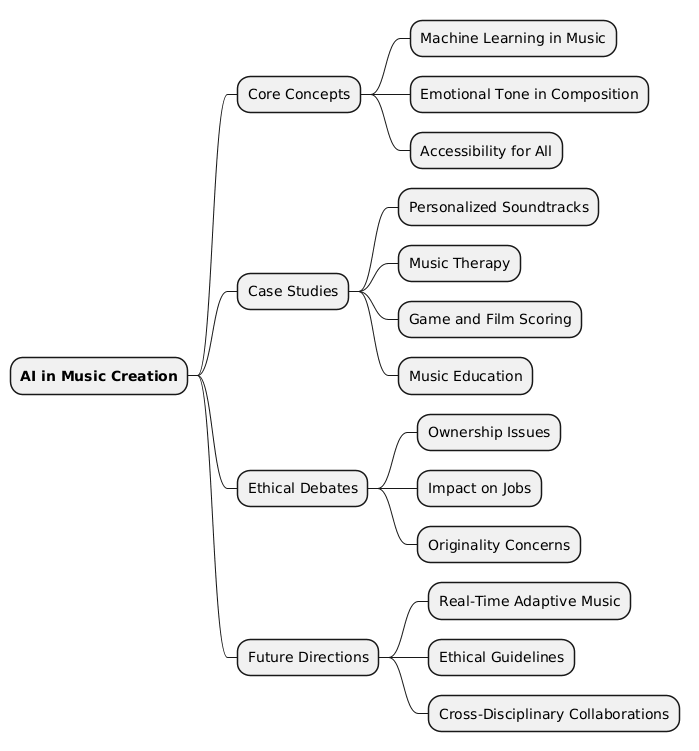
Key Takeaways:
💡 Insightful Idea: AI is not just a tool but a collaborator in music creation, opening new avenues for innovation.
⚠️ Warning: Ethical dilemmas around originality and ownership need urgent attention.
🔍 Key Detail: Platforms like Beatoven.ai make music creation accessible to everyone, regardless of skill level.
🚀 Future Opportunity: Real-time adaptive music could revolutionize live performances and audience engagement.
🌍 Societal Impact: AI democratizes music creation, making it more inclusive but also challenging traditional artistry.
This article showcases how AI is reshaping the music industry, from empowering creators to raising critical ethical questions. As technology harmonizes with creativity, the future of music promises to be as dynamic as the compositions it inspires.