Generative AI is revolutionizing software development by automating tasks, improving productivity, and enhancing code quality. This article explores how Large Language Models (LLMs) like ChatGPT, GitHub Copilot, and Bard are transforming software engineering—from requirements analysis to testing and maintenance. We cover key concepts, real-world applications, challenges, and future trends, providing concrete examples to illustrate their impact.
1. Introduction to Generative AI in Software Engineering
Generative AI refers to AI models capable of generating text, code, and even design artifacts based on input prompts. In software engineering, these models assist in:
- Code generation (e.g., GitHub Copilot)
- Bug fixing (e.g., automated program repair)
- Documentation (e.g., auto-generating API docs)
- Testing (e.g., test case generation)
Example: GitHub Copilot in Action
A developer types:
# Function to sort a list in Python GitHub Copilot suggests:
def sort_list(lst):
    return sorted(lst)
This reduces boilerplate coding and speeds up development.
2. Key Applications of Generative AI in Software Development
2.1 Requirements Engineering
LLMs help extract and refine requirements by:
- Identifying ambiguities in natural language specs
- Generating use cases from high-level descriptions
- Classifying functional vs. non-functional requirements
Example:
Input Prompt:
“A travel booking system should allow users to search for flights.”
LLM Output:
- Functional Requirement:
- “System shall provide a search bar for flight queries.”
- Non-Functional Requirement:
- “Search results should load in under 2 seconds.”
2.2 Design & Architecture
AI assists in:
- UML diagram generation (class, sequence diagrams)
- Microservices decomposition
- Database schema design
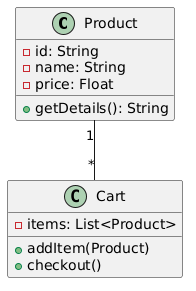
Example:
Prompt:
“Generate a class diagram for an e-commerce system.”
Output:
2.3 Code Generation & Completion
Tools like ChatGPT and Bard can:
- Write functions from descriptions
- Refactor code
- Convert pseudocode to executable code
Example:
Prompt:
“Write a Python function to check if a string is a palindrome.”
Output:
def is_palindrome(s):
    return s == s[::-1]
2.4 Testing & Debugging
AI automates:
- Test case generation (e.g., JUnit tests)
- Bug detection (e.g., static analysis)
- Automated fixes (e.g., suggesting patches)
Example:
Prompt:
“Generate unit tests for a login function.”
Output:
def test_login_success():
    assert login("user", "pass123") == True
def test_login_failure():
    assert login("user", "wrongpass") == False
2.5 Documentation & Maintenance
AI helps:
- Auto-generate comments
- Summarize code changes
- Translate code between languages
Example:
Prompt:
“Explain this Python function in plain English.”
Input:
def factorial(n):
    return 1 if n == 0 else n * factorial(n-1)
Output:
“This function calculates the factorial of a number using recursion.”
3. Challenges & Limitations
Despite its potential, Generative AI in software engineering faces:
- Hallucinations (incorrect or fabricated outputs)
- Security risks (e.g., vulnerable code suggestions)
- Ethical concerns (e.g., copyright issues)
- Dependency on training data (biased or outdated knowledge)
Example of Hallucination:
Prompt:
“Write a secure password hashing function in Python.”
LLM Output (Insecure):
def hash_password(password):
    return password[::-1]  # Reversing is NOT secure!
4. Future Trends
- AI pair programming (real-time collaboration)
- Self-healing code (auto-fixing runtime errors)
- Domain-specific LLMs (e.g., for healthcare or finance)
Mind Map
![PlantUML Syntax:<br />
@startmindmap<br />
*[#LightBlue] Generative AI in Software Engineering<br />
**[#LightGreen] Applications<br />
***[#Yellow] Requirements Engineering<br />
**** Use case generation<br />
**** Ambiguity detection<br />
***[#Yellow] Design & Architecture<br />
**** UML diagrams<br />
**** Microservices<br />
***[#Yellow] Code Generation<br />
**** Function synthesis<br />
**** Refactoring<br />
***[#Yellow] Testing<br />
**** Test cases<br />
**** Bug fixes<br />
***[#Yellow] Documentation<br />
**** Code summaries<br />
**** Translation<br />
**[#Pink] Challenges<br />
*** Hallucinations<br />
*** Security risks<br />
*** Ethical concerns<br />
**[#Orange] Future Trends<br />
*** AI pair programming<br />
*** Self-healing code<br />
*** Domain-specific LLMs<br />
@endmindmap<br />](http://www.plantuml.com/plantuml/img/NLB9IWGn4BtFLnGCU1WG12-25yTTc45nESWmXvYkJXScbRQIkFozrPiZSmdKzbwzLvcTfMma1-8gc7QssCnNv9fyxWjkuGOPnMJwH5ZU0J4ynJf_6K6uOaUCACHkjfY6RWIHjx1iMqzMno8dBMhr5RsFNrjun8z2WW4vfps8nG9U4e8r-hYHDl9GM8OtSeNo3rIOqKw57Uub9d8C1_EZuvDJM8fjgEihWYFoUWKL6IScf26p9YineNoInRqbBsA5Vygd5QuBzxoGVZWtIZVYF69jR8wJY1tACwRyfwmBUcdZr7bnKDFtFlDbjANpvXzllqmg8HYXQVfP32S_DMtc3yJlkdPZl4TsGnVSQbGiyUuCy8IsIEUYK7eVKbUvqKjvi94jIj-tcTyhljFhNvVEGQL3hePs_GIj8O5MOkTb60KgigyF6pHU4ufLzRQhd6283rEBbcgoi5gjq-nCmQRFzWi0)
Conclusion
Generative AI is reshaping software development, but human oversight remains crucial. By combining AI efficiency with human expertise, teams can achieve faster, higher-quality software delivery. The future holds even more advanced automation, making AI an indispensable tool for developers.