Hugging Face and HuggingChat are reshaping the AI landscape by making cutting-edge machine learning accessible to all. These open-source platforms empower developers, researchers, and businesses to innovate collaboratively. This article explores their origins, applications, ethical implications, and the future of open-source AI.

Introduction & Context
In the rapidly evolving world of artificial intelligence, accessibility and collaboration have often been overshadowed by proprietary models and closed ecosystems. Enter Hugging Face, a trailblazer in the open-source AI movement, and its conversational counterpart, HuggingChat. These platforms exemplify a paradigm shift toward democratizing AI, empowering individuals and organizations to innovate without barriers.
Founded in 2016, Hugging Face began as a chatbot app but quickly pivoted to become a hub for state-of-the-art machine learning models. Today, it boasts an extensive library of pre-trained models for tasks ranging from natural language processing (NLP) to computer vision. HuggingChat, a more recent addition, mirrors the functionality of ChatGPT but operates within an open-source framework, offering transparency and customization.
This shift toward open-source AI is not just a technical evolution; it is a cultural one. It challenges the dominance of tech giants, promotes ethical AI practices, and fosters a global community of contributors. But what exactly makes Hugging Face and HuggingChat so revolutionary? Let’s dive deeper.
Description
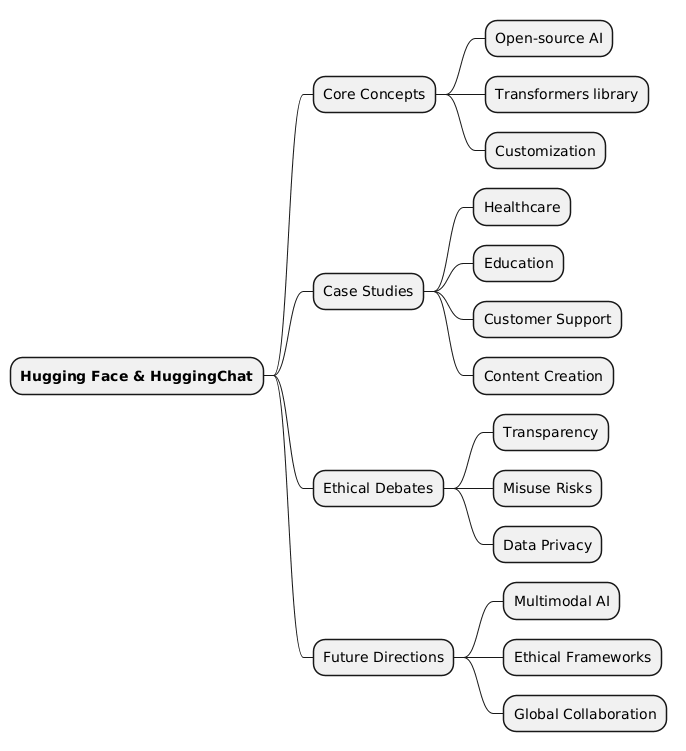
At its core, Hugging Face is a platform and community for open-source machine learning. Its flagship product, the Transformers library, provides pre-trained models that developers can fine-tune for specific tasks. These models cover a wide range of applications, including text generation, sentiment analysis, translation, and more.
HuggingChat, on the other hand, is an open-source conversational AI. Built to rival proprietary tools like OpenAI’s ChatGPT, it offers similar capabilities—such as generating human-like text responses—but with the added benefits of transparency and adaptability. Users can access the model architecture, customize it for niche applications, and even contribute to its improvement.
Key features of Hugging Face and HuggingChat include:
- Accessibility: Free access to pre-trained models and datasets.
- Customization: Tools for fine-tuning models to specific needs.
- Community: A collaborative ecosystem where developers share insights and improvements.
- Integration: Compatibility with popular frameworks like PyTorch and TensorFlow.
These platforms embody the ethos of open-source: empowering users to take control of technology rather than being mere consumers.
Use Cases
1. Healthcare: Early Disease Detection
Hugging Face’s NLP models are being used to analyze medical records and research papers. For instance, researchers have fine-tuned models to identify early signs of diseases like Alzheimer’s by analyzing patient data and clinical notes.
2. Education: Personalized Learning
HuggingChat is revolutionizing education by serving as a customizable tutor. Schools and educators can adapt the chatbot to answer subject-specific questions, provide feedback on essays, or simulate interactive learning experiences.
3. Customer Support: Enhanced Interaction
Businesses are leveraging HuggingChat to create bespoke chatbots tailored to their brand voice. Unlike generic solutions, these chatbots can understand industry-specific jargon and provide more accurate responses, improving customer satisfaction.
4. Content Creation: Automating Creativity
From generating blog posts to drafting code, Hugging Face’s models are a boon for content creators. For example, marketing teams use these tools to brainstorm campaign ideas or generate ad copy, reducing the creative workload.
How To Use Hugging Face and HuggingChat
Step-by-Step Guide to Hugging Face
- Access the Platform: Visit Hugging Face and create an account.
- Explore Models: Browse the Transformers library for pre-trained models suited to your project.
- Set Up Your Environment: Install the Transformers library using Python:
pip install transformers
- Load a Model: Use Python to load a model and tokenizer:
from transformers import AutoModelForCausalLM, AutoTokenizer

model = AutoModelForCausalLM.from_pretrained("gpt2")
tokenizer = AutoTokenizer.from_pretrained("gpt2")
- Fine-Tune: Customize the model with your dataset for specific tasks.
- Deploy: Integrate the model into your application or API.
Step-by-Step Guide to HuggingChat
- Visit HuggingChat: Go to HuggingChat.
- Interact: Start a conversation by typing your query into the chatbox.
- Customize: Download the source code to adapt the chatbot for your needs.
- Deploy Locally: Follow documentation to host HuggingChat on your server.
- Collaborate: Join the Hugging Face community to share improvements and learn from others.
Ethical Debate
The open-source nature of Hugging Face and HuggingChat brings both opportunities and challenges. Let’s explore the ethical dimensions.
Pros
- Transparency: Open-source code allows for scrutiny, reducing the risk of hidden biases or malicious functionalities.
- Collaboration: A global community ensures rapid innovation and diverse perspectives.
- Accessibility: Democratizes AI, enabling smaller organizations and underrepresented groups to participate.
Cons
- Misuse: Open access can lead to harmful applications, such as deepfakes or misinformation campaigns.
- Quality Control: Without centralized oversight, there’s a risk of inconsistent or unreliable contributions.
- Data Privacy: Users must ensure compliance with data protection laws when fine-tuning models.
The societal implications are profound. On one hand, these platforms empower individuals and promote inclusivity. On the other, they necessitate robust governance frameworks to mitigate misuse.
Future Directions
As Hugging Face and HuggingChat evolve, several trends and questions emerge:
- Advancements in Multimodal AI: Integrating text, image, and audio capabilities into a single model.
- Ethical AI Frameworks: Developing guidelines to ensure responsible usage.
- Global Collaboration: Expanding the community to include contributors from diverse backgrounds.
- Regulatory Challenges: Navigating laws and policies around AI deployment.
The future of open-source AI is bright, but it requires a collective effort to address its complexities. Hugging Face and HuggingChat are not just tools; they are catalysts for a more inclusive and innovative AI ecosystem.
Mind Map
Key Takeaways
- 💡 Insightful Idea: Hugging Face and HuggingChat democratize AI, empowering global innovation.
- ⚠️ Warning: Open-source access can lead to ethical dilemmas, including misuse and data privacy issues.
- 🔍 Key Detail: These platforms excel in customization, making them ideal for niche applications.
- 🚀 Future Opportunity: Advancements in multimodal AI could redefine machine learning capabilities.
- 🌍 Societal Impact: By promoting inclusivity, these tools challenge the dominance of proprietary AI systems.
Hugging Face and HuggingChat are more than platforms; they are harbingers of a new era in artificial intelligence—one that is open, collaborative, and ripe with possibilities.