- Artificial Intelligence (AI) is reshaping the way we interact with social media, making platforms smarter and more efficient.
- This transformation enhances content creation, user engagement, and strategic marketing, but also raises ethical concerns.
- Learn how AI tools are integrated into social media platforms like LinkedIn and their implications for the future of digital communication.

Introduction & Context
Social media, once a simple tool for sharing life updates, has evolved into a sophisticated ecosystem powered by artificial intelligence (AI). From content recommendations to targeted advertising, AI now plays a pivotal role in shaping our online interactions. Platforms like LinkedIn have embraced generative AI to enhance user experiences, enabling professionals to create content, network, and market with unprecedented ease.
The integration of AI into social media aligns with a broader trend: the rise of generative intelligence. Unlike traditional algorithms, generative AI can produce original content, such as text, images, and even videos. This capability has transformed industries, including marketing, journalism, and education. For social media, it marks a new era where creativity meets automation.
LinkedIn, a professional networking giant, has been at the forefront of this shift. With tools like AI-driven article suggestions, personalized learning feeds, and advanced recruitment features, it exemplifies how AI can redefine user engagement. But as with any technological leap, the adoption of AI in social media raises questions about ethics, authenticity, and the balance between automation and human touch.
Description: What is AI in Social Media?
AI in social media refers to the use of machine learning and natural language processing (NLP) algorithms to analyze, generate, and optimize content on platforms. These technologies enable platforms to:
- Analyze user behavior: AI tracks likes, shares, and comments to understand user preferences.
- Generate content: Tools like ChatGPT or DALL·E create posts, captions, and visuals tailored to specific audiences.
- Enhance engagement: AI suggests hashtags, identifies trending topics, and even predicts the best times to post.
- Automate processes: From chatbots to automated replies, AI simplifies customer service and community management.
LinkedIn, for instance, leverages AI to offer features like “Recruiter 2024,” which helps HR teams identify potential candidates more efficiently. Similarly, its “Sales Navigator” uses AI to refine client prospecting, making it a powerful tool for B2B marketing.
Use Cases: Real-World Examples
1. LinkedIn Articles and Collaborative Content
LinkedIn’s AI suggests topics for articles and posts, helping users generate professional content effortlessly. For example, AI-driven prompts can inspire a recruiter to write about “Top Skills for 2025,” backed by real-time data from LinkedIn Learning.
2. Recruitment and Talent Acquisition
AI-powered “Recruiter 2024” identifies candidates based on job descriptions, skills, and activity on the platform. This tool shortens the hiring process and ensures better matches, benefiting both employers and job seekers.
3. Sales Navigator for B2B Marketing
The Sales Navigator tool uses AI to analyze LinkedIn profiles and recommend potential clients. It also provides insights into engagement patterns, helping businesses tailor their outreach strategies.
4. LinkedIn Learning Feed
AI curates personalized learning paths for users, presenting courses relevant to their career goals. The platform’s TikTok-style vertical video feed makes professional development engaging and accessible.
How to Use AI in Social Media
Here’s a step-by-step guide to leverage AI tools on LinkedIn:
1. Writing Articles with AI Suggestions
- Log in to your LinkedIn account.
- Navigate to the “Start a Post” section and select “Write an Article.”
- Use AI-generated prompts for topic ideas.
- Edit and personalize the content before publishing.
2. Enhancing Recruitment with AI
- Access “Recruiter 2024” via LinkedIn Recruiter.
- Enter job descriptions and desired candidate criteria.
- Review AI-suggested profiles and reach out to potential candidates.
3. Using Sales Navigator for Marketing
- Subscribe to LinkedIn’s Sales Navigator.
- Define your target audience and business objectives.
- Use AI-driven insights to refine your search and connect with prospects.
4. Personalized Learning with LinkedIn Learning
- Open the LinkedIn Learning app or website.
- Explore AI-recommended courses based on your profile and activity.
- Save or enroll in courses that align with your career goals.
For more details, visit LinkedIn’s official website: https://linkedin.com/
Ethical Debate
Pros of AI in Social Media
- Efficiency: AI automates repetitive tasks, freeing up time for strategic planning.
- Personalization: Users receive tailored content, enhancing their experience.
- Scalability: Businesses can manage larger audiences without proportional increases in resources.
Cons of AI in Social Media
- Authenticity Concerns: Over-reliance on AI can lead to generic or impersonal content.
- Bias in Algorithms: AI systems may inadvertently perpetuate biases present in training data.
- Privacy Issues: The collection and analysis of user data raise concerns about surveillance and data misuse.
Societal Implications
The ethical use of AI in social media requires balancing innovation with accountability. Transparency in algorithm design and data usage is crucial to maintain trust. Moreover, as AI-generated content becomes more prevalent, distinguishing between human and machine-created posts may become challenging, impacting authenticity and credibility.
Future Directions
The integration of AI in social media is just the beginning. Future advancements may include:
- Hyper-Personalized Experiences
AI could create entirely unique feeds for users, blending professional updates, learning resources, and entertainment seamlessly. - Voice and Video AI
Expect tools that generate voiceovers or video content tailored to individual profiles, enhancing multimedia storytelling. - Ethical AI Frameworks
Developing standards for ethical AI use in social media will be a priority, ensuring fairness, transparency, and accountability. - AI-Driven Community Building
AI could facilitate the creation of niche communities by connecting users with shared interests and goals.
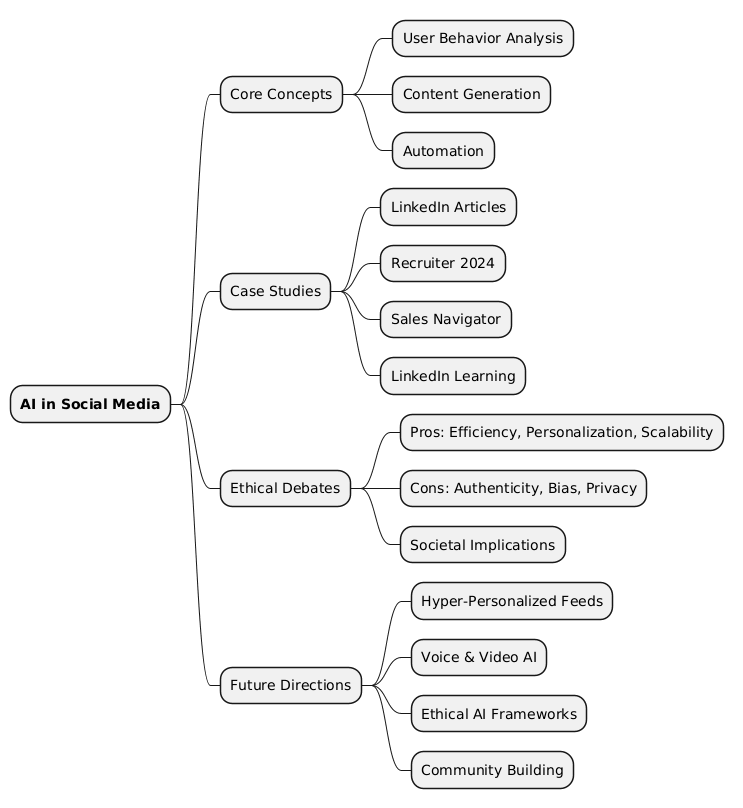
Mind Map
Key Takeaways
- 💡 Insightful Idea: AI transforms social media by automating content creation and enhancing user engagement.
- ⚠️ Warning or Challenge: Ethical concerns like bias and privacy must be addressed to ensure fair AI usage.
- 🔍 Key Detail: LinkedIn leverages AI for recruitment, marketing, and personalized learning, setting a benchmark for other platforms.
- 🚀 Future Opportunity: Advancements in voice and video AI could revolutionize multimedia storytelling on social media.
- 🌍 Societal Impact: The rise of AI in social media calls for transparency and accountability to maintain user trust.
This article captures the transformative impact of AI on social media, offering insights into its capabilities, challenges, and future potential. It emphasizes the need for ethical considerations as we navigate this new digital frontier.