Lexica Art is transforming visual creativity with AI-driven technology. It offers new possibilities and challenges in the art and tech worlds. This article explores its impact, use cases, and future potential.
Introduction & Context
In the dynamic intersection of art and technology, Lexica Art emerges as a groundbreaking platform that leverages AI to redefine visual creativity. This innovation traces its roots back to the early 21st century’s AI advancements, where machine learning began to influence artistic processes. Today, Lexica Art stands at the forefront, offering tools that challenge traditional boundaries and enable artists to explore uncharted creative territories.
Lexica Art’s relevance in the current landscape is profound. As AI continues to permeate various sectors, its application in art raises questions about creativity, authorship, and the role of technology in human expression. Lexica Art not only exemplifies technological prowess but also sparks discussions on the ethical and societal implications of AI in art.
Description
Lexica Art is an AI-powered platform designed to assist artists in generating unique visual content. By utilizing advanced algorithms, Lexica Art analyzes input data—such as text descriptions or existing images—to produce new, original artworks. This process involves complex neural networks that mimic human creativity, offering artists a collaborative tool rather than a mere replacement.
The platform is accessible to both amateur and professional artists, providing a user-friendly interface that democratizes art creation. Lexica Art’s capabilities range from generating simple illustrations to crafting intricate designs, making it a versatile tool in the digital artist’s arsenal.
Use Cases
- Artistic Inspiration: Lexica Art serves as a muse for artists seeking fresh ideas. By inputting a few keywords, artists can explore a variety of generated artworks that inspire new directions in their projects.
- Commercial Design: Companies utilize Lexica Art for branding and marketing materials. The AI’s ability to create consistent yet diverse visual content helps businesses maintain a cohesive aesthetic across campaigns.
- Education and Training: In educational settings, Lexica Art is used to teach students about AI’s role in art. It provides a practical example of how technology can enhance creative processes, preparing students for future careers in digital art.
- Personal Projects: Hobbyists and independent creators use Lexica Art to experiment with new styles and techniques, expanding their creative horizons without the need for extensive technical skills.
How To Use Lexica Art
To begin using Lexica Art, follow these steps:
- Visit the Website: Access Lexica Art at https://lexica.art.
- Create an Account: Sign up for a free account to start exploring the platform’s features.
- Explore the Gallery: Browse through existing artworks to understand the platform’s capabilities and gather inspiration.
- Generate Art: Use the “Create” feature to input your ideas. You can start with text prompts or upload images for the AI to transform.
- Customize and Save: Adjust the generated artwork using Lexica Art’s editing tools. Save your creations to your account or download them for personal use.
Ethical Debate
The integration of AI in art, as exemplified by Lexica Art, brings forth several ethical considerations. On the one hand, it democratizes art creation, making it accessible to a broader audience. However, it also raises concerns about the authenticity and originality of AI-generated works.
Pros:
- Accessibility: Lexica Art lowers the barriers to entry for aspiring artists, allowing more people to engage in creative endeavors.
- Innovation: The platform encourages experimentation and innovation, pushing the boundaries of traditional art forms.
Cons:
- Authorship: Determining the creator of AI-generated art challenges traditional notions of authorship and intellectual property.
- Job Displacement: As AI tools become more prevalent, there is concern about the potential impact on jobs in the creative industry.
Societal Implications
Lexica Art’s influence extends beyond individual creators to societal perceptions of art and technology. It prompts a reevaluation of what it means to be an artist in the digital age and how technology can both aid and disrupt creative industries.
Future Directions
Looking ahead, Lexica Art is poised to evolve alongside advancements in AI technology. Potential developments include enhanced personalization features, allowing users to tailor the AI’s creative process to their unique style. Additionally, integrating more sophisticated machine learning models could lead to even more complex and nuanced artworks.
As AI continues to advance, Lexica Art may play a pivotal role in shaping the future of digital art, influencing how we create, consume, and value artistic expression.
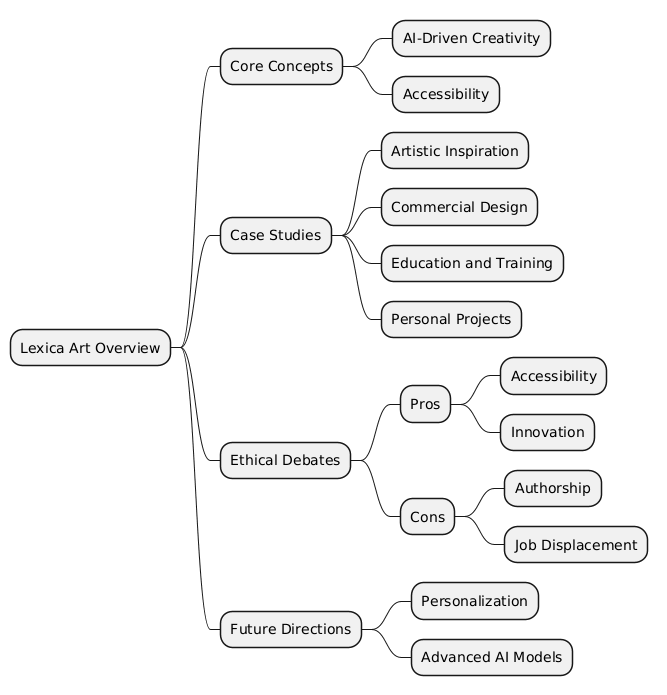
Mind Map
Key Takeaways
- 💡 Lexica Art democratizes art creation, making it accessible to all.
- ⚠️ Ethical dilemmas arise around authorship and originality in AI-generated art.
- 🔍 Lexica Art serves diverse use cases, from commercial design to personal projects.
- 🚀 Future advancements in AI promise more personalized and complex artworks.
- 🌍 Lexica Art influences societal views on art and technology, redefining creativity in the digital age.
This article aims to provide a comprehensive overview of Lexica Art, exploring its technological, ethical, and societal dimensions. By understanding its current applications and future potential, readers can appreciate the transformative impact of AI on the world of art.